The affordability challenge
Kenyan households use a range of on-site sanitation technologies, including septic tanks, biogas latrines, composting or dehydrating toilets and pit latrines. Pit latrines remain common because they are affordable, while the construction and maintenance costs of other systems create barriers to safer sanitation.
From hackathon to field pilot
Finish Mondial launched the first Santech Hackathon in 2020 to encourage new designs, materials and processes that could reduce the cost of sanitation systems for rural populations.
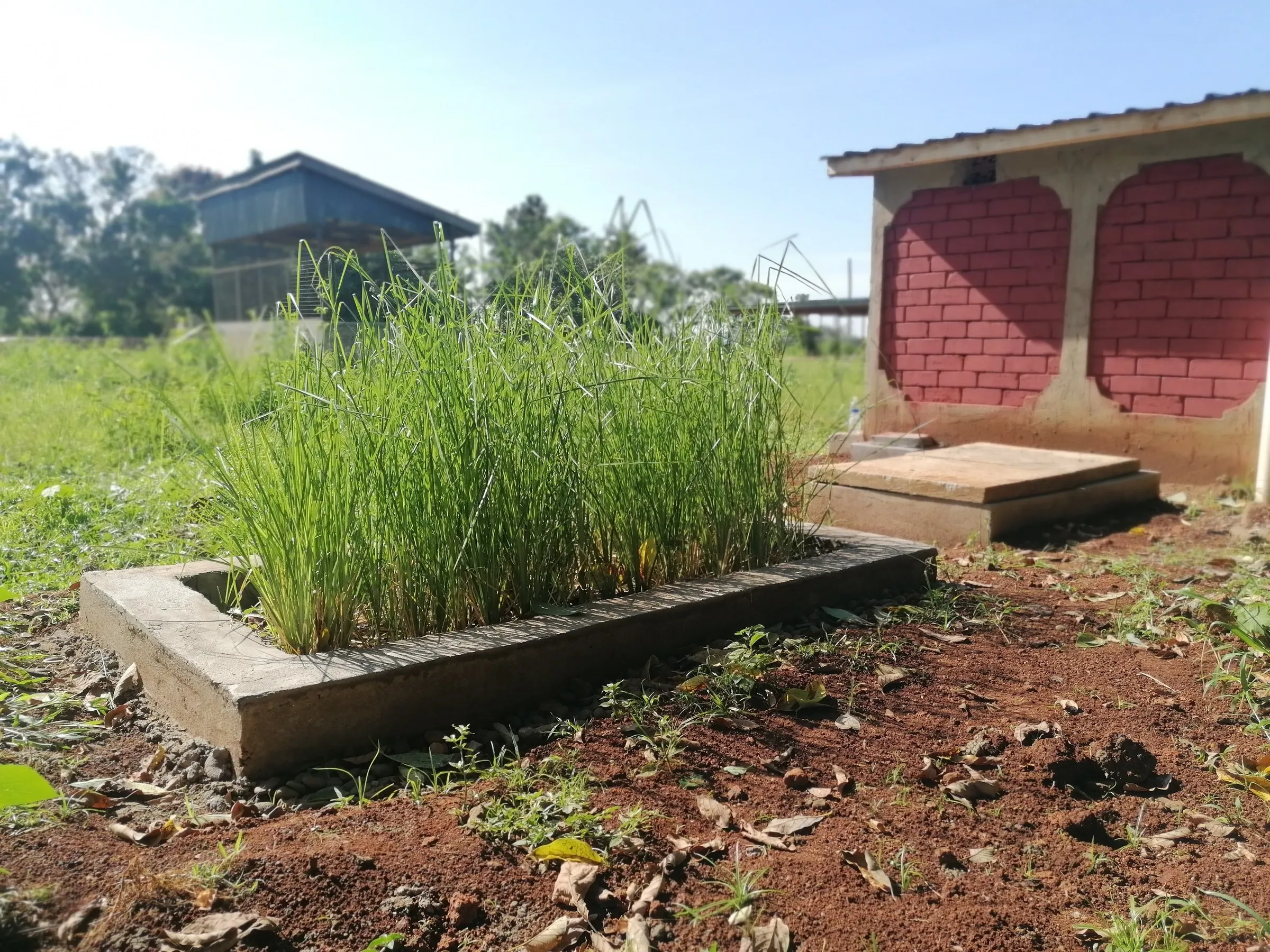
Opero won with the Vetiver Green Latrine, a concept that replaces a conventional pit with PVC barrels and vetiver grass. Finish Mondial and Opero installed a pilot in Busia, Kenya, and monitored it for six months to evaluate its performance.
Why vetiver grass
The latrine takes its name from vetiver grass (Chrysopogon zizanioides), a perennial bunchgrass with strong absorption characteristics. Its ability to take up nutrients and heavy metals—and tolerate elevated concentrations of them—makes it useful for polishing leachate and wastewater.
The three-part treatment system
Three connected features allow the latrine to contain and treat fecal waste without a conventional pit or septic tank:
- A SATO pan with a mechanical seal that closes after use, helping to prevent insects and gases from passing through the toilet.
- A two-barrel septic system in which solids settle and decompose while leachate flows onward to the planted treatment bed.
- A lined vetiver bed that polishes the effluent, reducing the need for a separate processing facility.
Findings from the Busia pilot
The six-month study examined cost, rural usability and environmental performance:
- Materials for the latrine cost USD 185, excluding the toilet superstructure, indicating lower capital and operating costs.
- The system demonstrated strong usability in a rural setting, with no reported odor, maintenance or excreta-handling issues during the study.
- Effluent polishing reduced wastewater parameters and the risk of groundwater contamination compared with a traditional pit latrine.
Commercialisation pathway
In 2024, Opero partnered with the Western Kenya Sanitation Project to train local artisans to construct green latrines, establish four demonstration sites and test market potential through a target of at least 40 installations.
The collaboration advanced both the product and its business model toward wider delivery.