A portable vacuum suction machine for pit-emptying teams that need to work where vacuum trucks cannot go.
The problem
On-site sanitation systems such as pit latrines and septic tanks need regular emptying to stay safe and usable.
Conventional vacuum trucks (honeysuckers) often cannot reach dense, informal or difficult terrain.
Fully manual emptying is slow and can expose operators and communities to unnecessary risk.
How it works
The PitVaq (formerly known as the eVac) is a portable vacuum suction machine developed byPartners in Developmentin South Africa. An engine or electric motor drives a vacuum pump, which pulls air from a vacuum tank through an air hose. With the tank under vacuum, sludge is drawn from the pit through a sludge hose into the tank, then discharged into drums for burial on site or transport to a treatment facility.
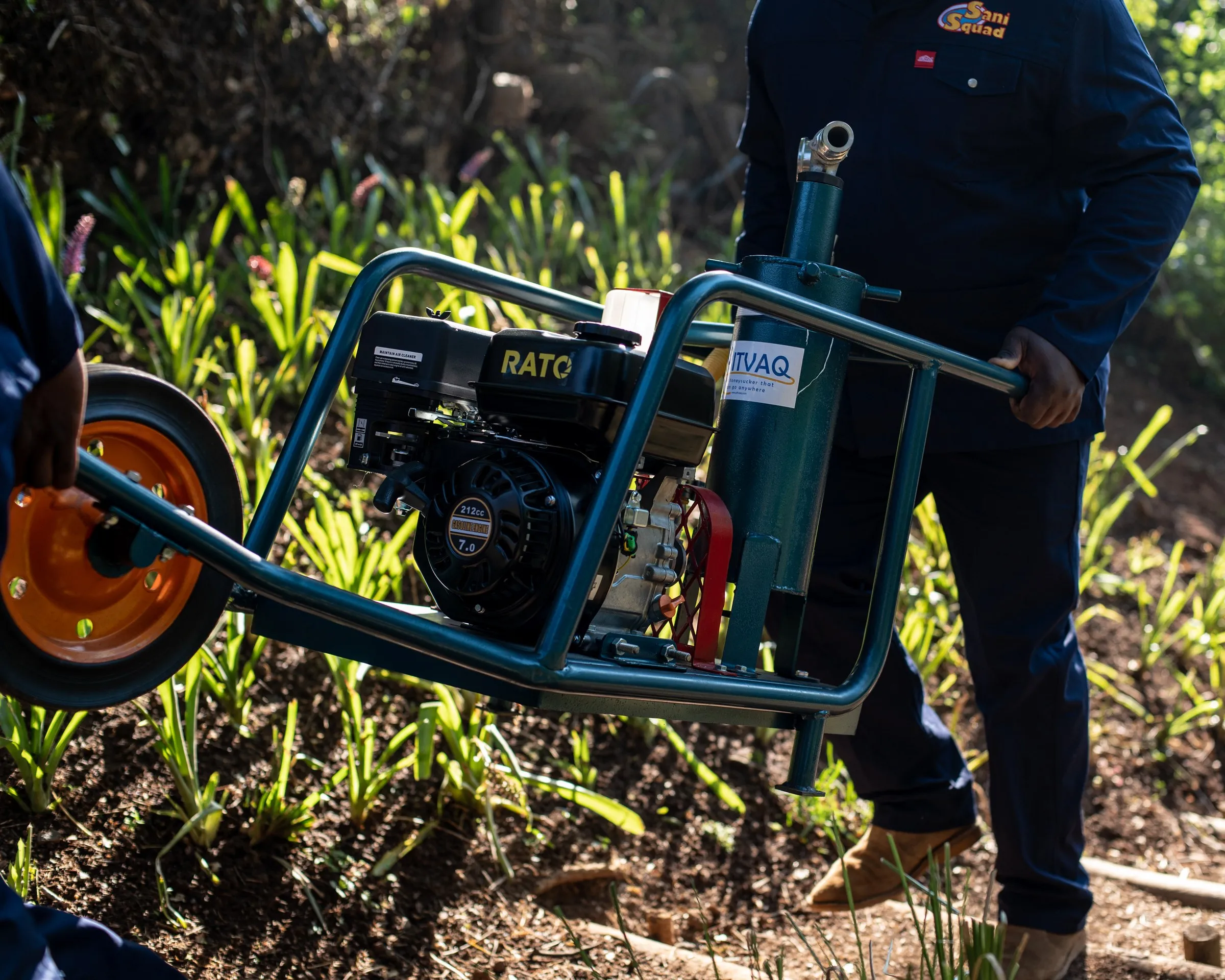
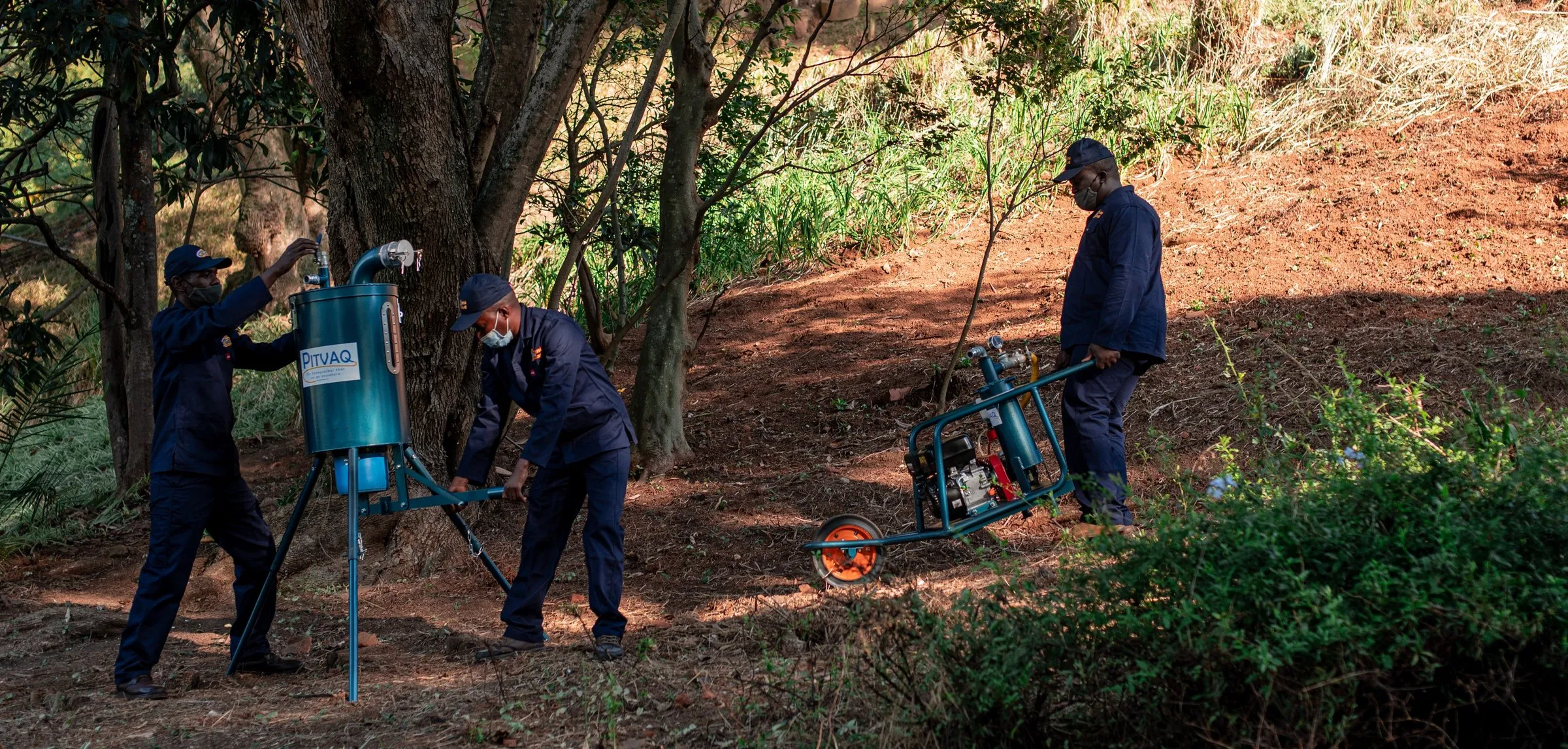
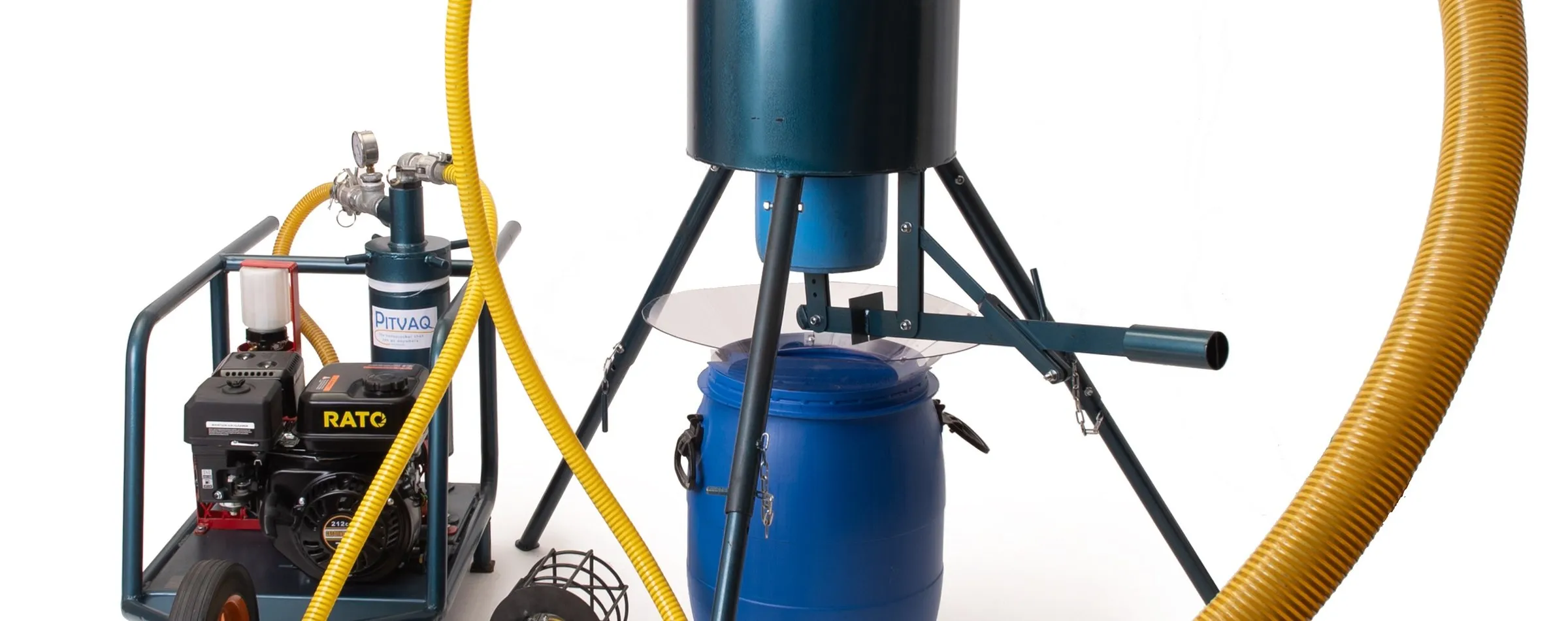
Pump chassis and tank setupVacuum tank and hose connectionsField operation
Field photos frompitvaq.com/ Partners in Development.
Main components
Pump chassis: electric motor or petrol engine, vacuum pump and moisture trap.
Vacuum tank: tank with sludge discharge valve, plus a lid with a ball float valve.
Hoses: an air hose between the moisture trap and tank lid, and a larger sludge hose with a trash screen at the pit end.
See it in the field
Manufacturer walkthrough from Partners in Development covering setup, safe operation and routine maintenance.
How does the Pitvaq work?Partners in Development walks through PitVaq setup, safe operation and routine maintenance for portable vacuum pit emptying.
Setting up
Wear PPE: uniform, gloves, boots and a mask.
Place a ground sheet under the unit and keep disinfectant (for example bleach) ready for anything that contacts sludge.
Set the vacuum tank on the ground sheet within sludge-hose reach of the pit; adjust the legs for the drum and ground surface.
Place a drum under the tank and fit the tank lid.
Confirm vacuum with the inlet closed — the gauge should read 70–80 kPa — then connect the air hose from the tank lid to the moisture trap.
Connect the sludge hose to the vacuum tank (extend if needed) and fit the trash screen at the pit end.
Operating the PitVaq
Work as a three- or four-person crew: one on tank valves, one on the sludge hose, and one or two swapping drums.
Place the sludge hose in the pit and start the engine.
Close the ball valve at the top of the tank so vacuum builds and sludge flows in. If sludge will not flow, add a little water and mix with a long-handled spade until it is pumpable.
When sludge reaches the ball float valve, break the vacuum by opening that valve, then open the discharge valve into the drum.
Swap the full drum for an empty one. Dispose of sludge by burying it in an approved pit on site, or take it to a treatment facility.
Repeat until the latrine or septic tank is emptied.
Maintenance after every use
Rinse the system by sucking a drum of water through the hose into the tank.
Open the moisture-trap drain to discharge accumulated liquid.
Keep the oil reservoir topped up during use.
If vacuum is low: check the hose end is submerged, the discharge valve is clean and seated, then inspect the rubber seals at the top and bottom of the tank.
Key specifications
PitVaq key specifications
Type
Portable vacuum suction machine
Also known as
eVac (former name)
Main components
Pump chassis, vacuum tank and hoses
Power options
Electric motor or petrol engine
Working vacuum
70–80 kPa (inlet closed)
Hoses
Air hose and larger sludge hose
Typical crew
3–4 people
Manufacturer
Partners in Development, Pietermaritzburg, South Africa
Training at Opero
Opero includes PitVaq training at the Kisumu WASH Technology Hub alongside the PuPu Pump and Gulper, with a focus on safety, dignity and service quality for sanitation operators. Partners in Development manufactures the machine and provides training and support to purchasers; more detail is available atpitvaq.com.