Edition three: mobility as a design requirement
The third edition of the PuPu Pump newsletter followed earlier issues introducing the pump and its water- and air-injection features. This issue turns to portability and transport adaptability—two features that shape whether an emptying technology can serve difficult sanitation environments.
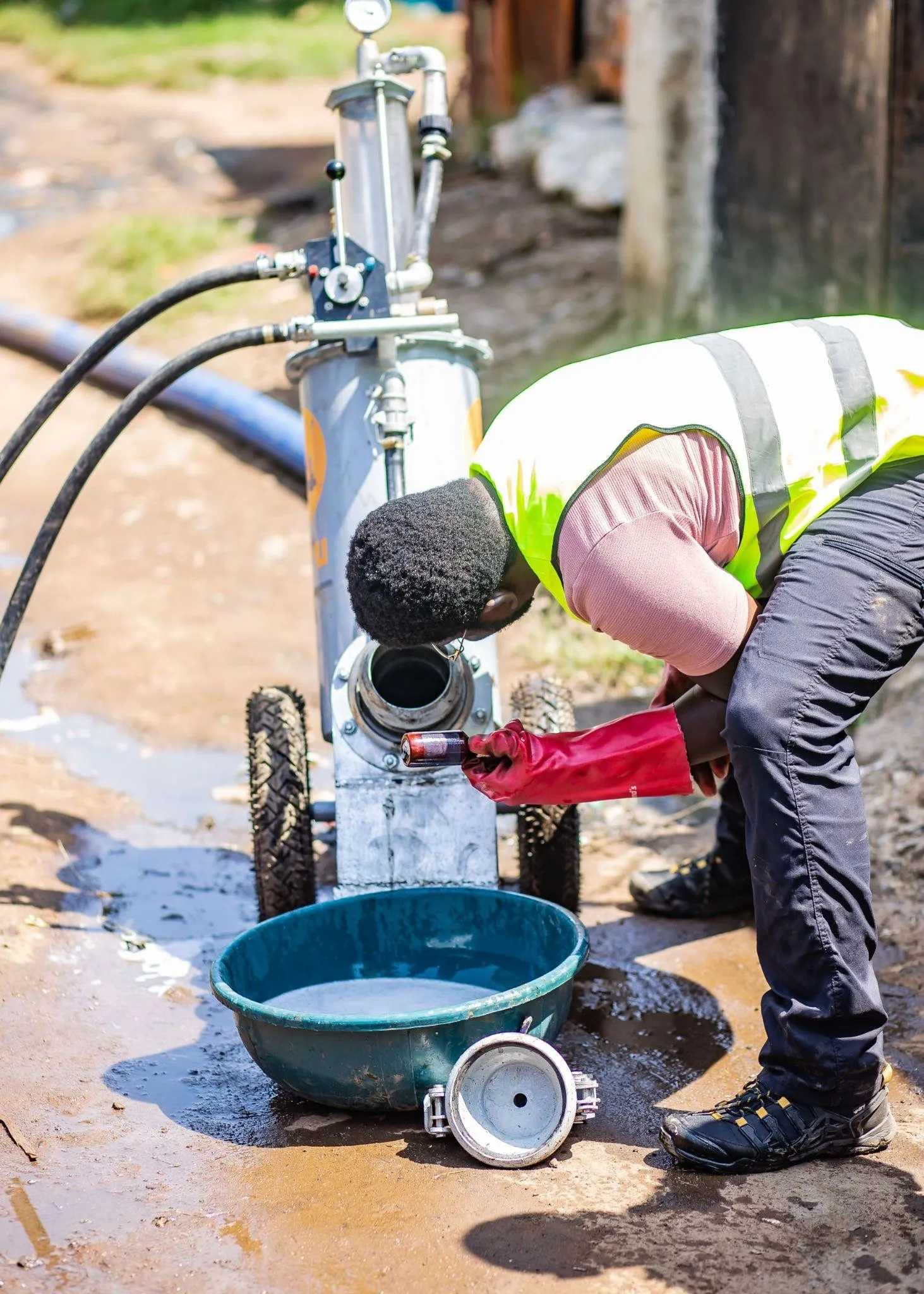
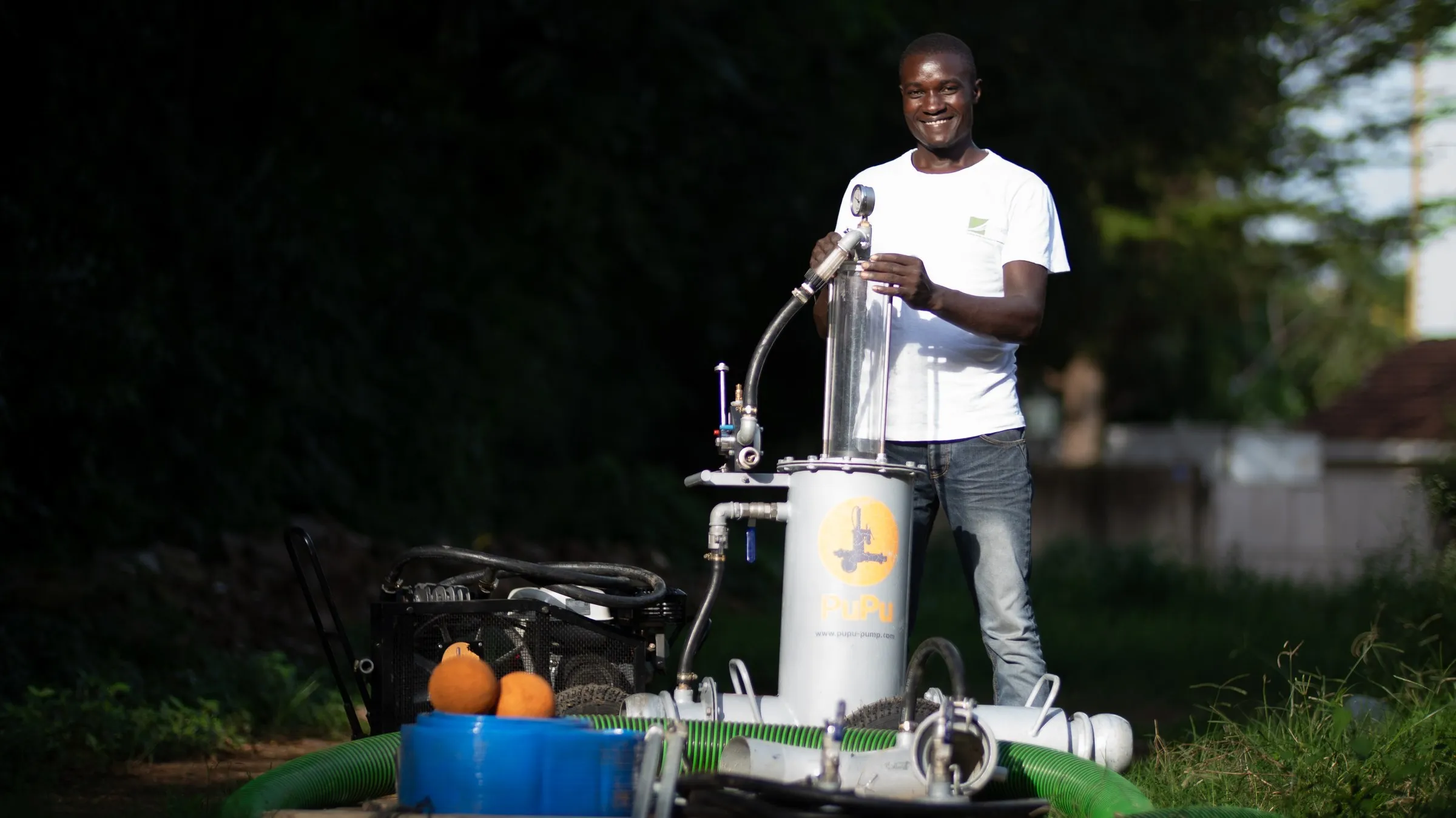
The PuPu Pump separates the job between two compact components: a pumping unit and a compressor. Together they extract sludge from a pit and transfer it to a storage tank or vacuum truck.
Two portable units, one pumping system
The petrol-driven compressor supplies air through hoses to the separate pumping unit. That unit creates the push-and-pull cycle that draws sludge from the pit and sends it through the delivery hose.
Each principal unit weighs 50 kg. Splitting the system into two wheeled components makes transport and positioning more practical than moving one large machine, while still requiring a planned handling method and trained operators.
- Pumping unit: positioned close enough to the latrine for the suction hose to reach the sludge.
- Compressor unit: powers the pump and can also support mixing or fluidising thick sludge when required.
- Air and sludge hoses: connect the units, the pit and the receiving tank without requiring a large vehicle beside the toilet.
Designed for hard-to-reach toilets
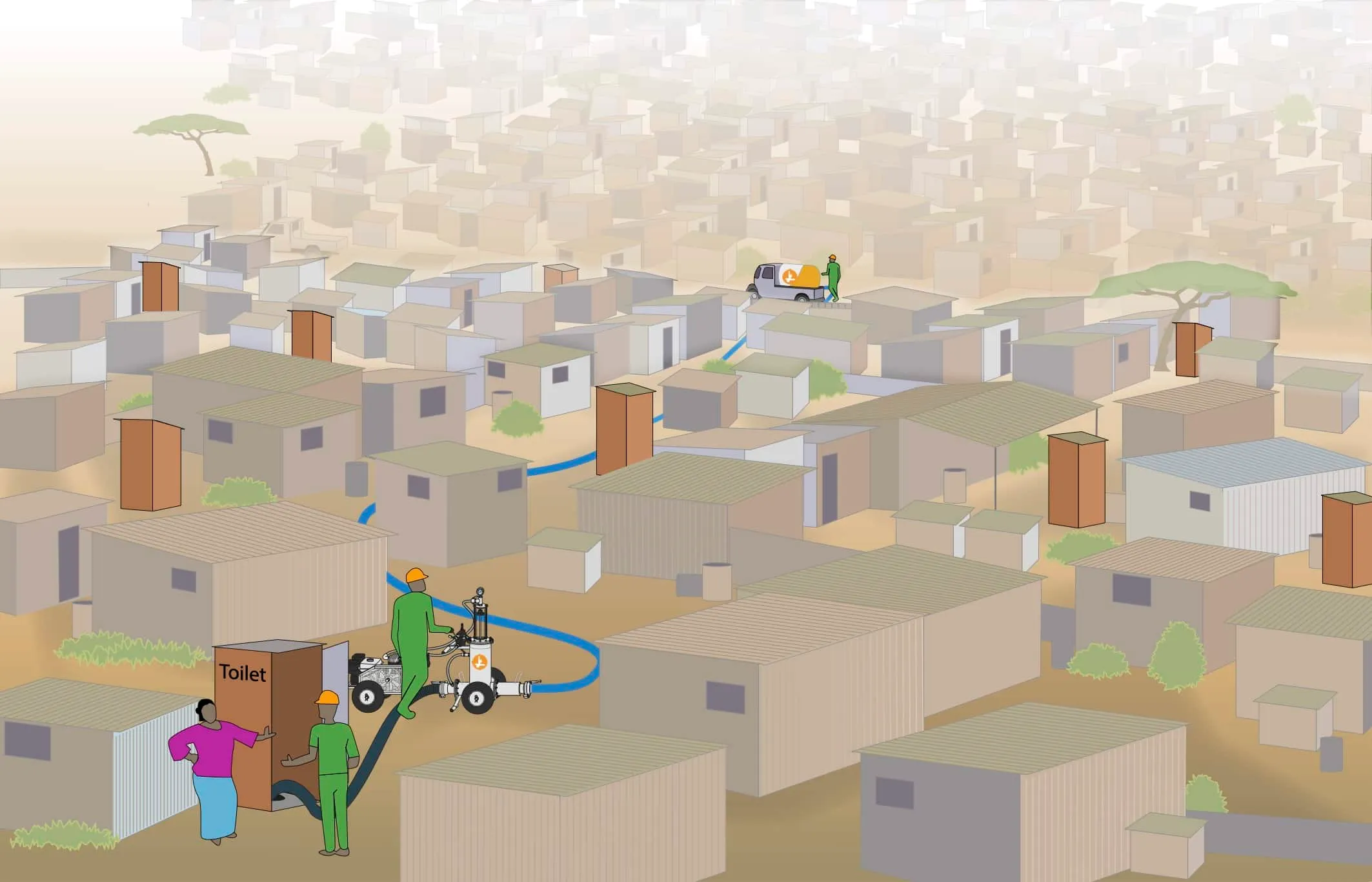
Dense settlements, narrow paths and unpaved terrain often prevent conventional vacuum trucks from reaching a latrine. A portable pump lets the equipment go to the toilet while the receiving vehicle or tank remains at an accessible point.
The PuPu Pump has a maximum suction depth of 8 m, a total head of 20 m and can deliver sludge through lay-flat hose for up to 100 m, depending on viscosity. This distance can bridge the gap between a hard-to-reach pit and a suitable collection point.
What travels with the pump
A standard set includes a 30 m delivery hose, a 6 m suction hose, spare parts, tools and operating manuals. Additional hose planning depends on the route, the sludge and the location of the receiving tank.
A transport vehicle is not included with the equipment, so operators still need a safe method for moving the pump, compressor and hoses between jobs. Portability improves access; it does not remove the need for logistics.
A field-ready operating sequence
- Position the receiving tank or vehicle at the nearest practical access point.
- Move the pump and compressor to stable working positions and connect the air hoses.
- Attach the suction and delivery hoses, mixing or fluidising the pit contents if necessary.
- Pump until the pit is empty or the receiving tank is full, while monitoring flow and pressure.
- Clean the sludge hoses with a sponge ball, inspect the equipment and transport the waste to an approved disposal site.
Portability must be supported
Portable equipment creates more service options, but reliable delivery still depends on operator training, route assessment, safe lifting and handling, preventive maintenance and access to spare parts.
Opero provides PuPu Pump training and after-sales support for sanitation operators in East Africa.