The service reality in urban Africa
Urban Africa is dominated by on-site sanitation, particularly pit latrines. Expanding sewer coverage remains an aspiration for many cities, but rapid population growth, limited access to water and the difficulty of extending infrastructure through established settlements mean that sewers cannot meet the entire need.
Pit latrines therefore require dependable emptying services. The practical question is how technology can help providers deliver those services more safely, efficiently and professionally in places conventional equipment cannot reach.
Why improved emptying technology matters
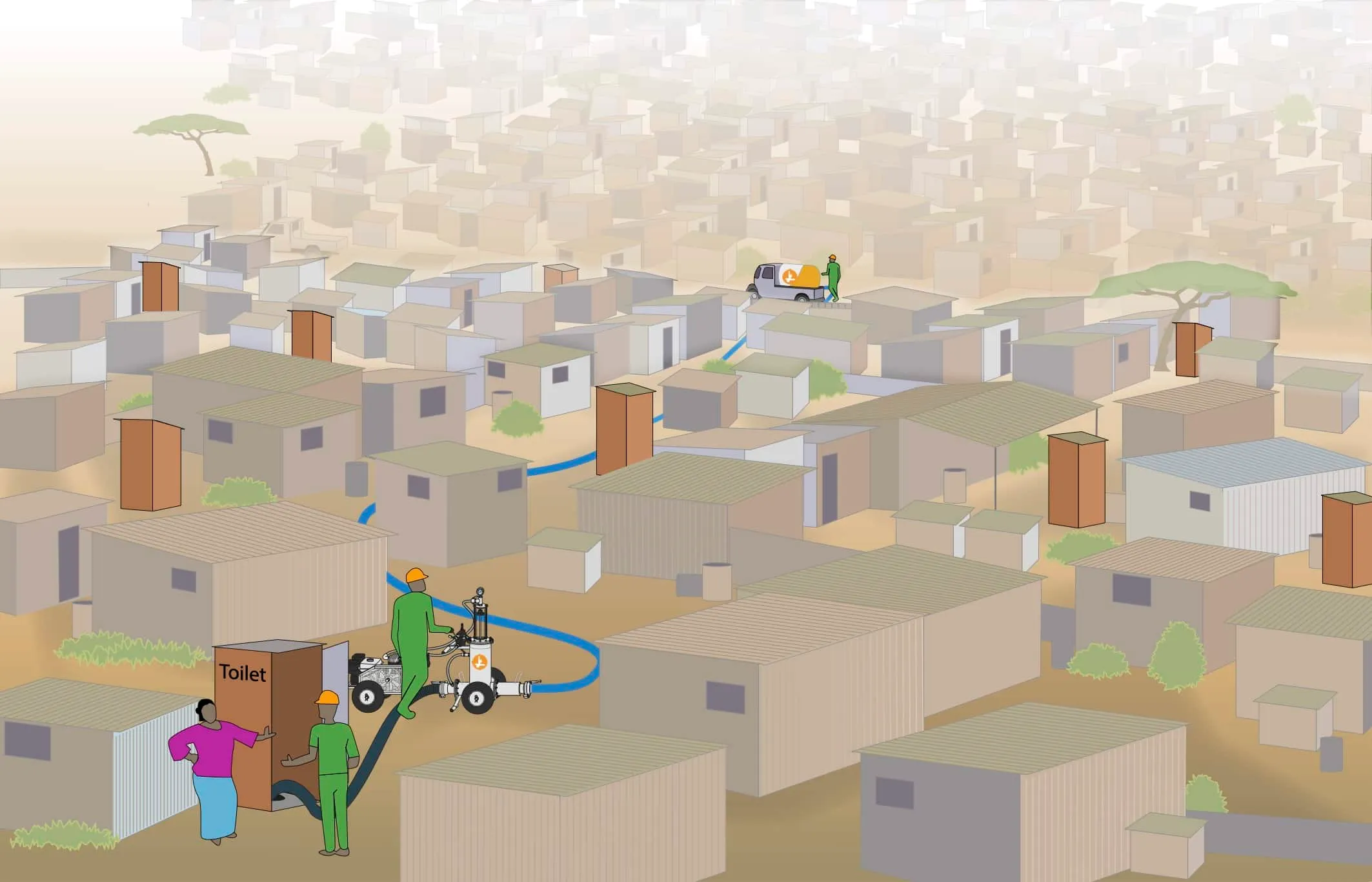
Manual emptying can expose workers and surrounding communities to fecal sludge. At the other end of the equipment spectrum, vacuum trucks are effective where roads and access allow them to reach the toilet, but many dense or informal settlements do not offer that access.
Portable technologies help fill the gap between those two realities. They can bring a more contained pumping process closer to the pit and transfer the collected sludge to a tank or vehicle positioned farther away.
What the PuPu Pump changes
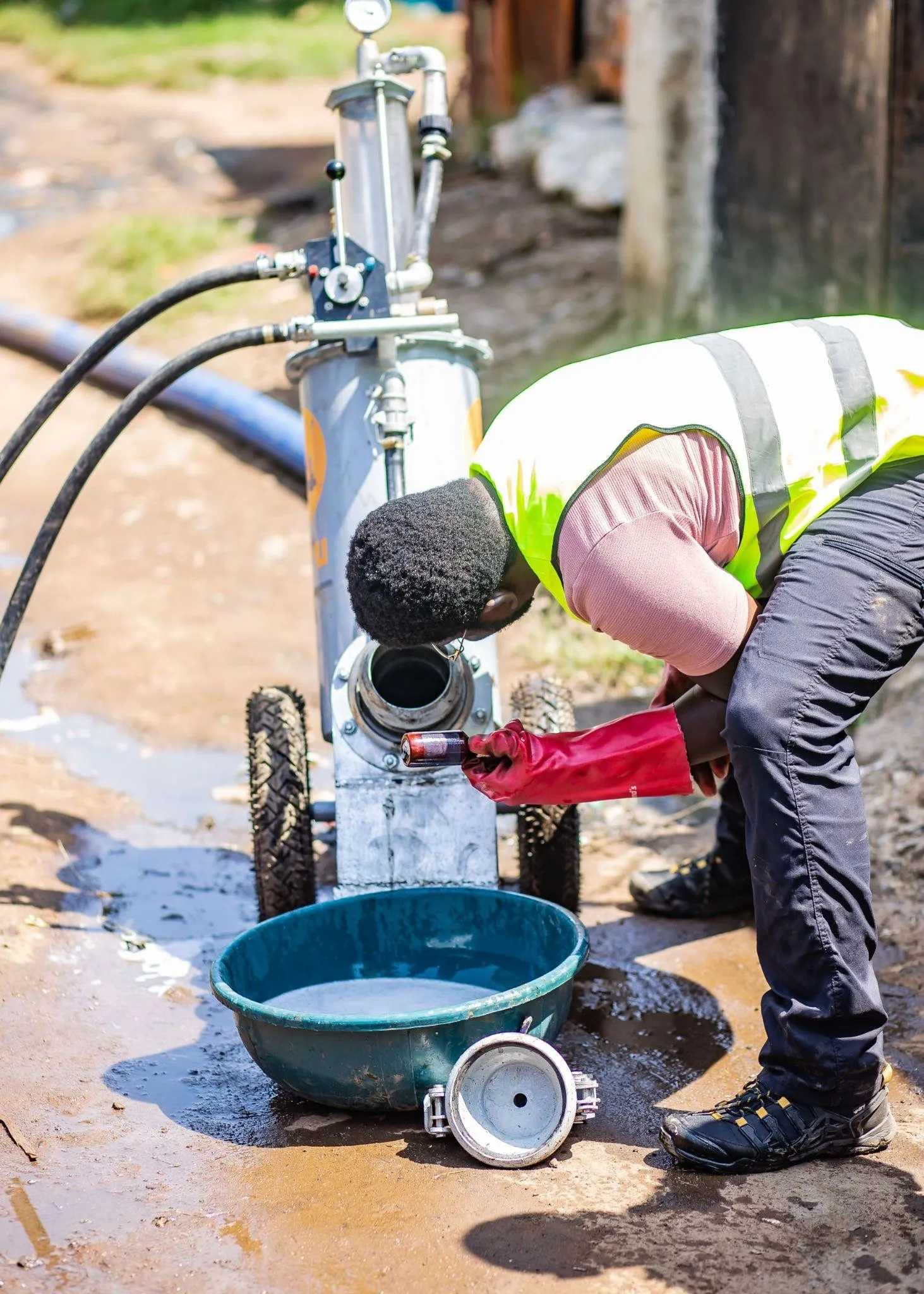
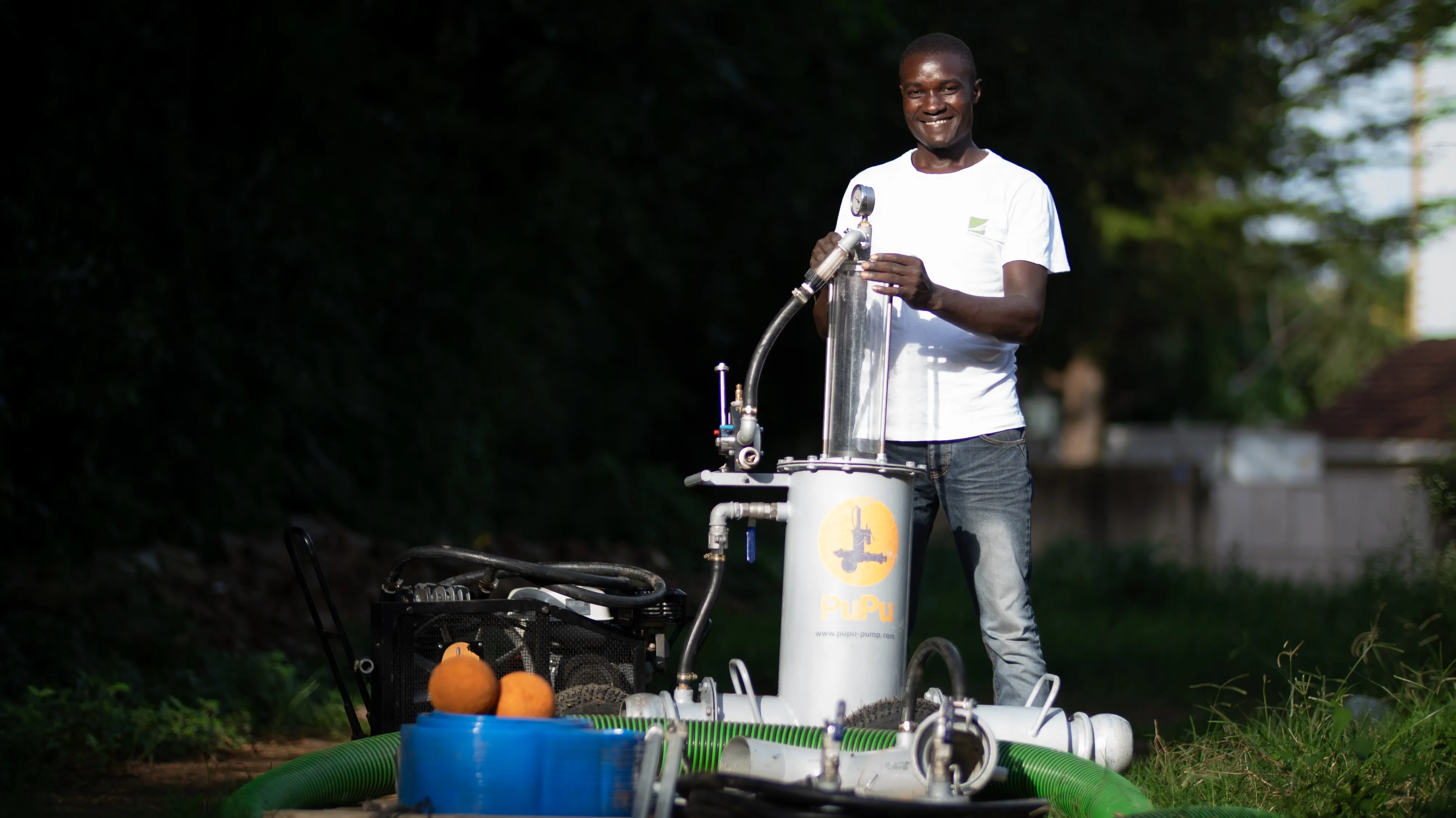
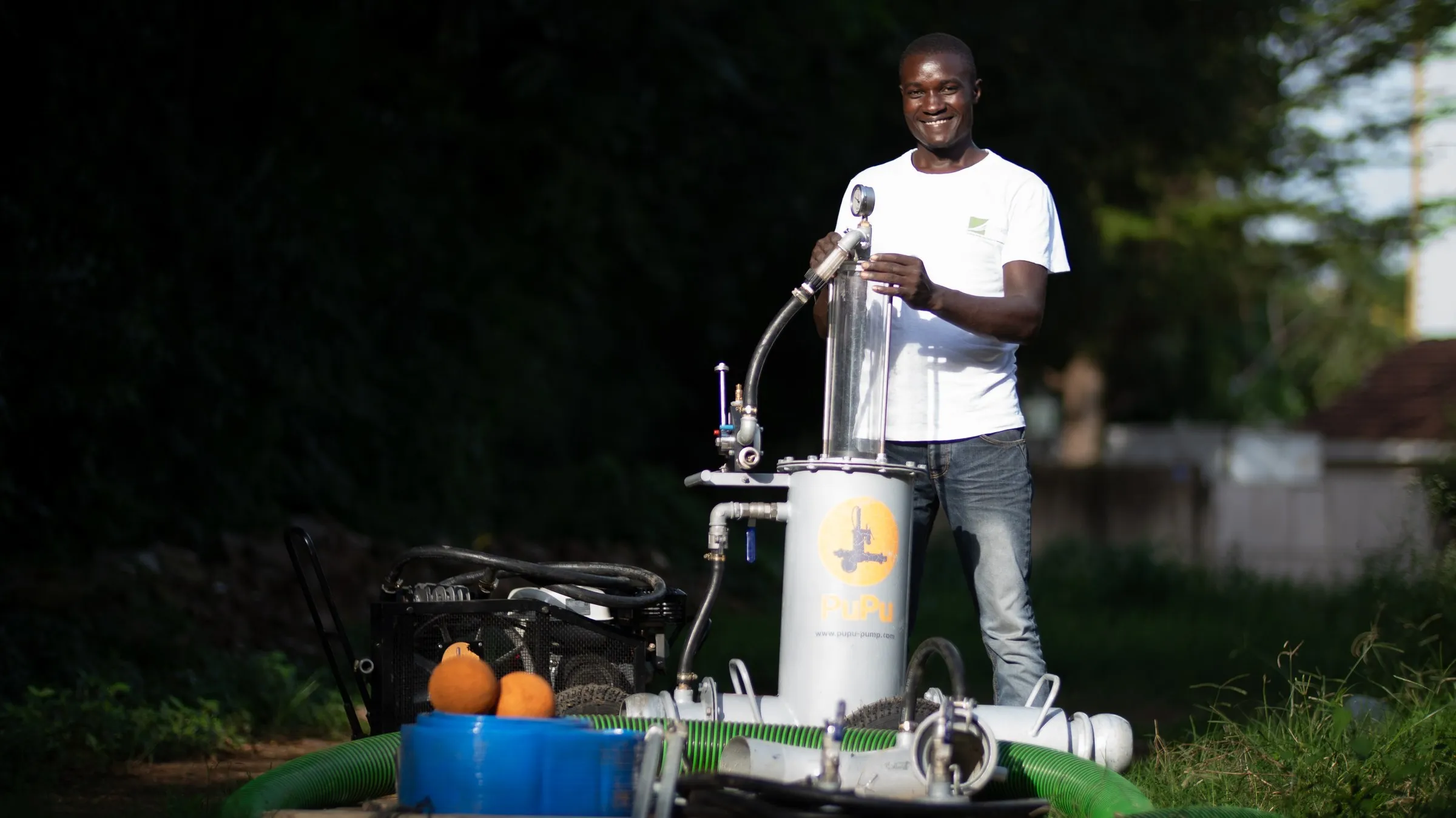
The PuPu Pump uses a petrol-driven compressor, a separate pumping unit and 100 mm sludge hoses. Air powers the unit as it draws sludge from the pit and pushes it through the delivery line to a receiving tank.
The closed process reduces direct operator contact with fecal sludge. Duckbill valves help the pump pass thick, pumpable sludge and small debris, while the system can move material up to 100 m depending on sludge viscosity.
- A portable configuration for toilets beyond the reach of a vacuum truck.
- A pumping yield of 1–7 m³ per hour, depending on sludge viscosity.
- A maximum suction depth of 8 m and total head of 20 m.
- Air-assisted mixing or fluidising when pit contents need preparation before pumping.
Technology is more than the machine
Adoption succeeds when equipment is matched with operator capability and a viable service model. Teams need training in site assessment, setup, safe operation, cleaning, routine inspection and troubleshooting.
Maintenance and after-sales support also determine whether a technology stays in service. Most PuPu Pump repairs can be handled locally, and a standard set includes spare parts, tools and manuals, but operators must plan for upkeep and replacement parts as part of the business.
Choose the technology for the pit
No emptying technology is suitable for every pit. Operators should assess access, sludge consistency, trash levels, pumping distance and the receiving arrangement before beginning a job.
The PuPu Pump can handle items such as sanitary napkins, small bottles, condoms and rags when they occur within otherwise pumpable sludge. It cannot pump garbage or solid, dry sludge. Knowing these limits protects the equipment, the operator and the economics of the service.
From demonstration to sustained use
Hands-on demonstrations allow service providers to compare equipment and understand how it behaves under field conditions. Training then turns that first exposure into repeatable operating practice.
Opero supports this path through equipment demonstrations, operator training and after-sales service, helping sanitation businesses evaluate and adopt technologies that fit their customers and working environments.