The sanitation challenge
Many growing urban areas lack sewer and water-distribution networks because conventional sewer infrastructure is prohibitively expensive. Sewers also depend on water to move waste, yet water is often scarce and costly in the places that need improved sanitation most. This makes widespread sewer coverage unlikely in much of the world.
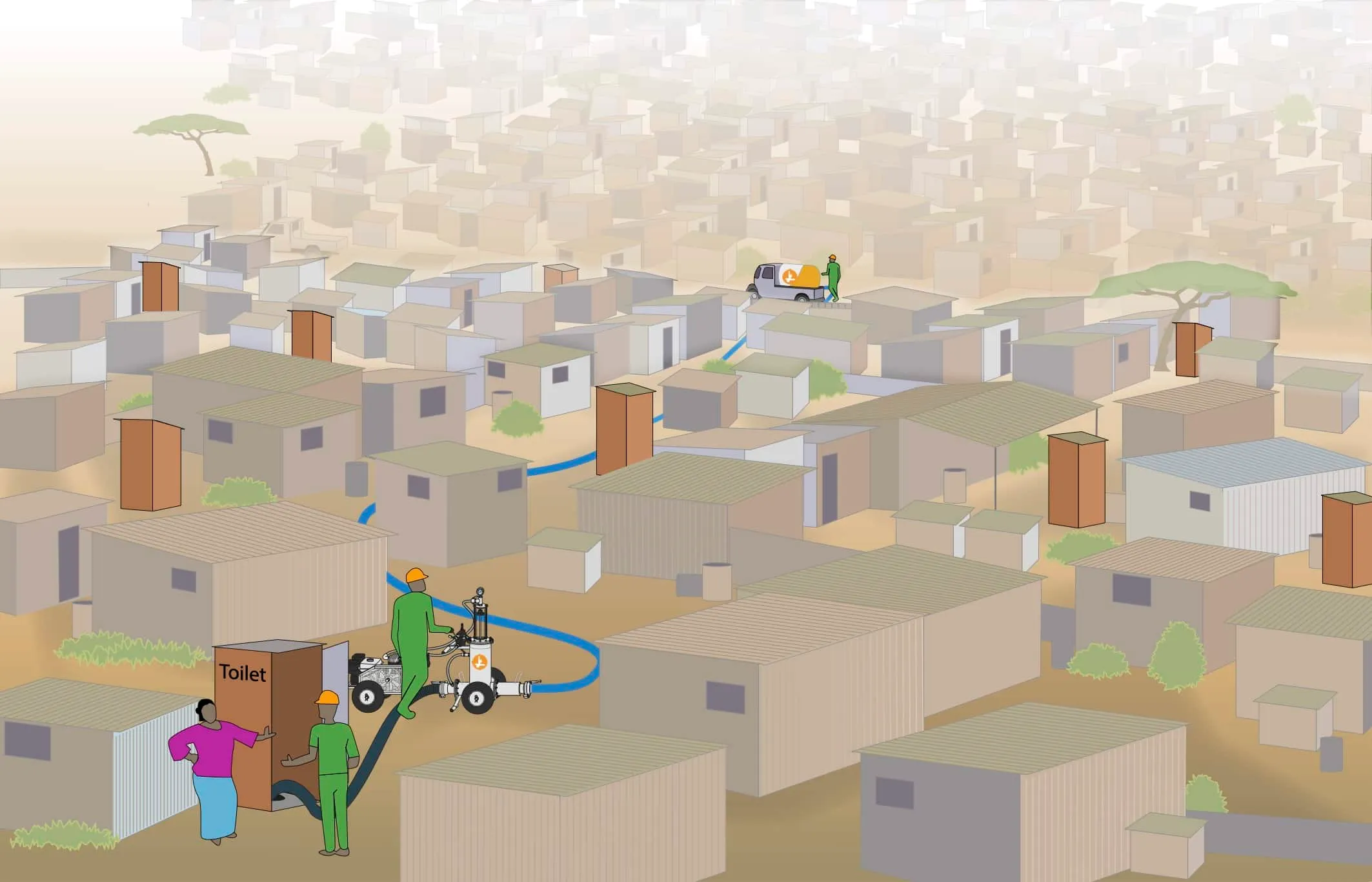
Pit latrines are therefore the primary sanitation option in many urban areas across sub-Saharan Africa. Emptying them and transporting their mixed liquid and solid waste to legal disposal sites can be expensive, particularly over long distances.
In densely populated neighbourhoods, the labour-intensive emptying and disposal process also creates serious health and environmental risks. An affordable, effective and scalable alternative is needed as households seek better sanitation options.
Testing the prototype
Between 2019 and 2022, Opero partnered with Factor E to test the Honey Dipper. The work combined laboratory and field testing of the prototype with research into the product's market potential.
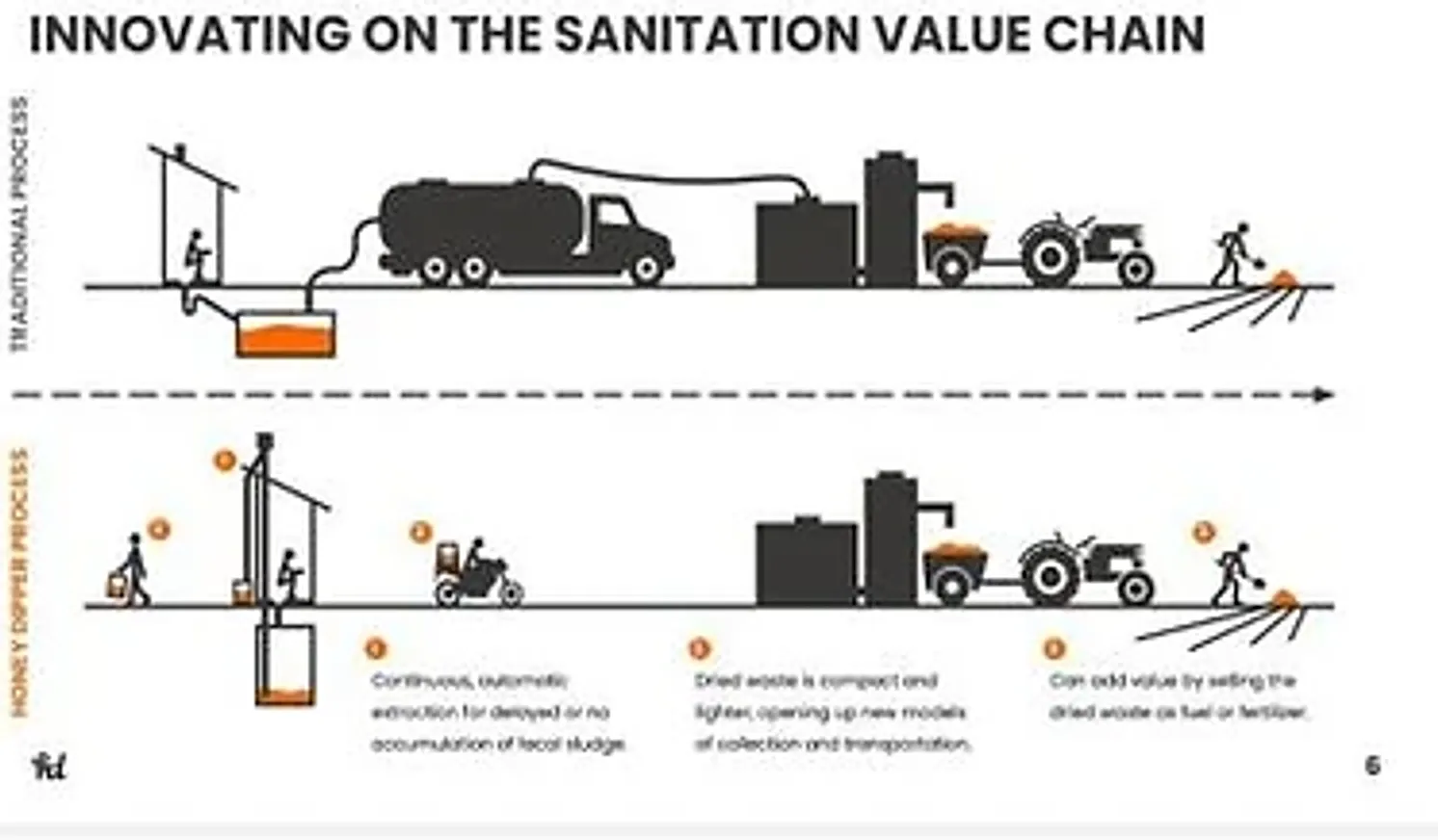
The Honey Dipper is a low-cost, waterless toilet designed to dehydrate and treat waste incrementally on site. By treating waste where it is produced, the concept aims to reduce dependence on transport and downstream treatment infrastructure.
How the Honey Dipper works
The mechanism works like a conveyor belt. A continuous loop rotates around drive and idler pulleys, lifting fecal sludge from a container or pit and allowing it to dry progressively as the belt moves. Weather conditions affect the amount of dried material produced.
- The belt picks up fecal sludge from the containment chamber.
- Material dehydrates incrementally as it travels around the loop.
- Dried material is scraped from the belt and collected in a separate container.
Pilot and market findings
Pilot testing found that the system could handle waste from at least five users per day.
The accompanying business-opportunity study identified potential relevance across 48 countries in sub-Saharan Africa, reflecting the scale of demand for sanitation products that can work without sewers or reliable water supplies.
Commercialisation learning
A central project finding was that product performance would determine both the viable route to market and which markets the Honey Dipper could realistically serve. Rapid prototyping and testing continued to refine the product and prepare it for market entry.