
Why this work matters
On-site sanitation is common across Kenya, but the cost of constructing and maintaining septic systems can put them beyond the reach of rural households. Pit latrines are more affordable, yet they can create groundwater and maintenance risks.
From hackathon to field pilot
Opero's concept won the first Santech Hackathon in 2020 with a design that replaces a conventional pit with PVC barrels and a planted vetiver treatment bed.
A six-month pilot in Busia, Kenya, examined usability, maintenance and effluent performance in a real rural setting. The 2021 Finish Mondial Global Sanitation Innovation programme also produced a design manual and monitoring framework for the treatment line.
Core system features
Sealed SATO pan
A mechanical seal helps prevent insects and gases from passing back through the toilet pan.
Two-barrel system
The barrels support solids decomposition and direct liquid effluent onward without a conventional septic tank.
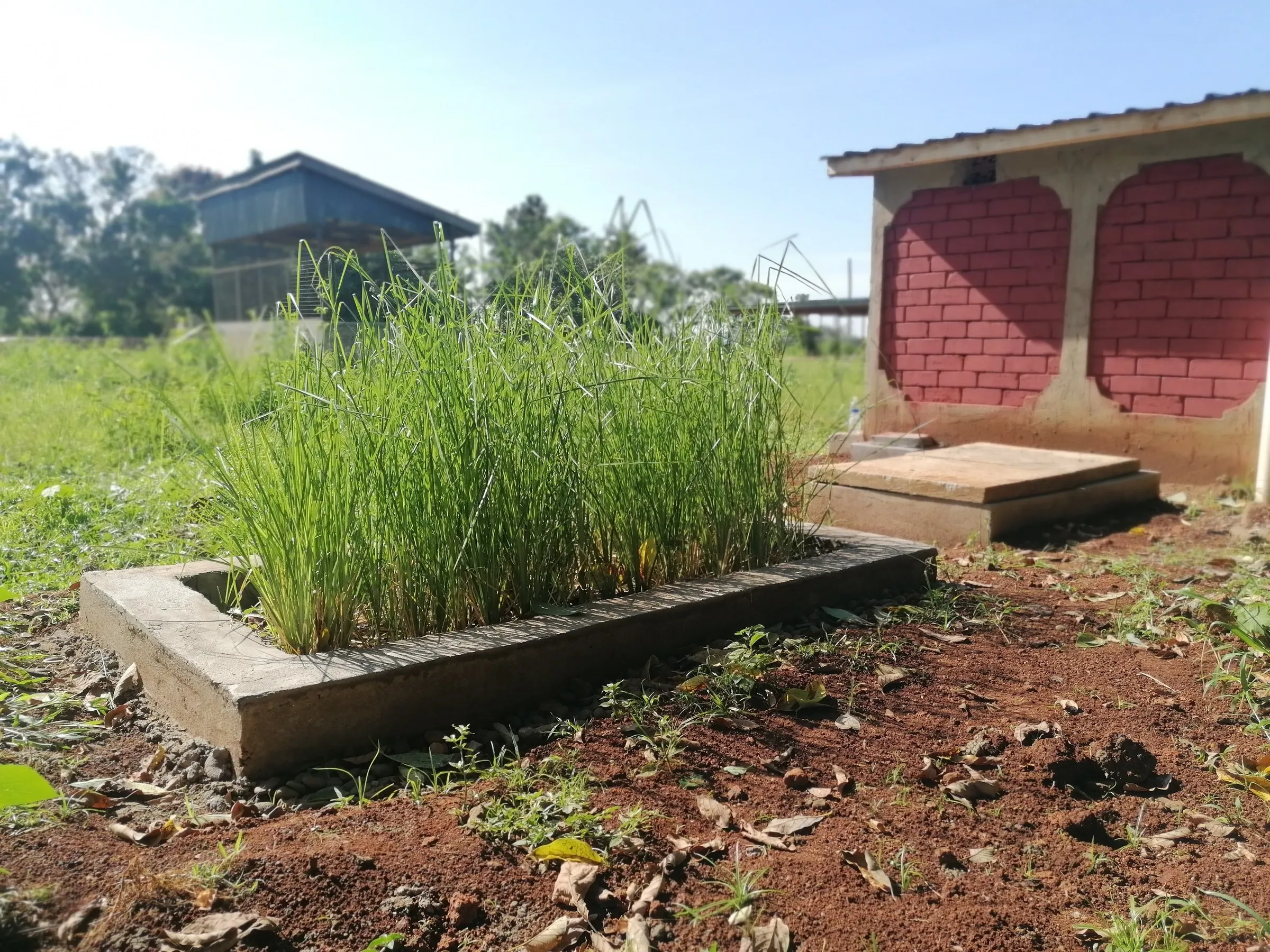
Vetiver treatment bed
A lined, planted bed uses vetiver grass to take up nutrients and help treat effluent naturally.
Applications
Rural households
A compact option for homes where conventional sewer and septic infrastructure is impractical.
Peri-urban plots
Barrel containment can reduce excavation needs where space and site conditions are constrained.
Local delivery models
A buildable system that can be delivered by trained artisans using locally available components.
Learning from Busia
A six-month rural pilot in Busia tested construction cost, household usability and effluent performance of the Vetiver Green Latrine.
- USD 185
- Construction cost, excluding superstructure
- 6 months
- Pilot monitoring period
- 2020
- Santech Hackathon win
Project findings
Cost-conscious construction
The Busia pilot was built for USD 185, excluding the superstructure.
Rural usability
No odor, maintenance or excreta-handling issues were reported during the six-month monitoring period.
Environmental protection
Monitoring found improved leachate quality and lower groundwater-contamination risk than a traditional pit.
What the approach offers
- Lower-cost alternative to conventional septic infrastructure
- Nature-based effluent treatment
- Reduced excavation compared with a traditional pit
- Adaptable for local artisan construction