
Why this work matters
Many growing urban areas lack sewer and water-distribution networks because the infrastructure is costly to build and operate. Water scarcity makes conventional flush-based systems even less practical.
A waterless treatment concept
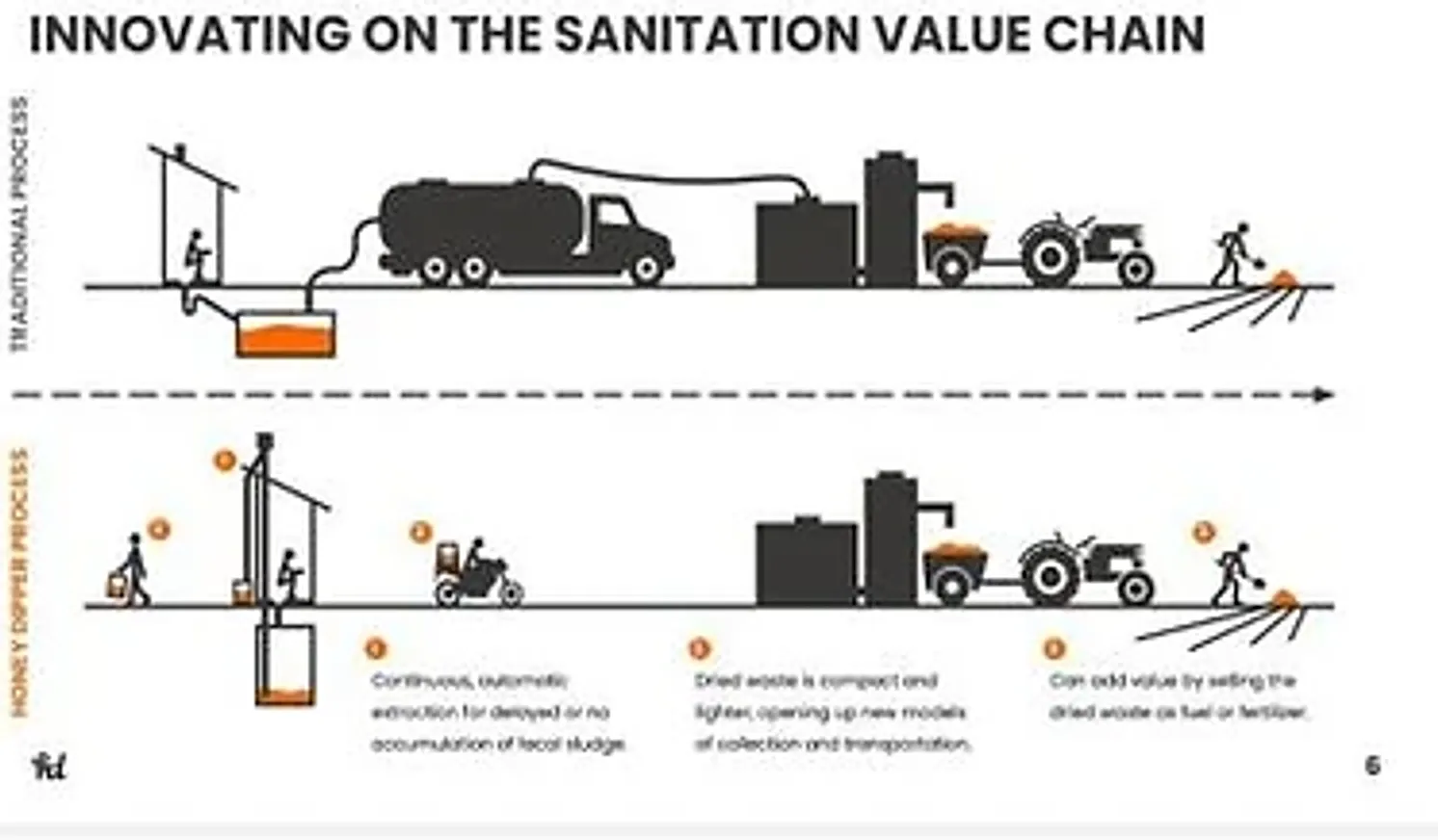
Between 2019 and 2022, Opero partnered with Factor E to test the Honey Dipper, a waterless toilet that incrementally dehydrates and treats waste at the point of use.
Its conveyor, drying and collection functions are designed as one contained process, reducing the need for downstream transport and treatment infrastructure.
Core system features
Waterless operation
The toilet is designed to operate without flush water, making it relevant in water-scarce settings.
On-site treatment
Waste is dehydrated and managed where the toilet is installed rather than carried through a sewer.
Integrated conveyor
A conveyor mechanism moves material through continuous processing, drying and collection stages.
Applications
Dense urban areas
A concept for places where conventional sewerage is technically or financially impractical.
Public facilities
Potential use in schools, markets and shared facilities that need water-efficient sanitation.
Households
A self-contained approach for homes without reliable water or sewer connections.
What the concept was built to achieve
The earlier project page presented these as prototype operating figures and design goals.
- 0
- Flush water required
- 100%
- On-site treatment concept
- 5+
- Users supported daily
What the approach offers
- No water required for operation
- Reduces dependence on sewers and waste transport
- Combines treatment and collection on site
- Designed for infrastructure-constrained communities