

Market intelligence research in Kisumu, Malindi, Nairobi (Eastlands), Naivasha and Wajir found that 80–100% of the population in these locations relies on non-sewered sanitation. Yet, much of the faecal sludge generated is not safely emptied or disposed of. As populations grow, the gap between sanitation needs and available treatment capacity presents a pressing challenge, but also an opportunity to rethink how sanitation services are delivered and financed.
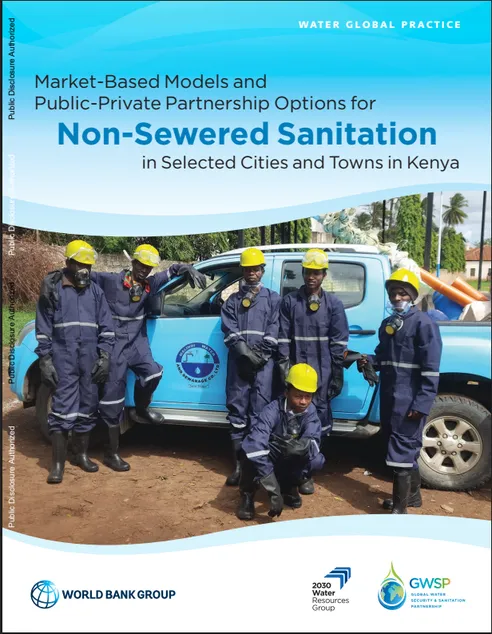
In this World Bank report, Market-Based Models and Public-Private Partnership Options for Non-Sewered Sanitation in Selected Cities and Towns in Kenya, readers will find an assessment of the market potential, barriers to growth and business models that could help scale up safer sanitation services.
The report examines opportunities across the entire sanitation value chain, from toilet construction and pit emptying to transport, treatment and resource recovery. It also explores how public-private partnerships and performance-based financing could support service providers, expand access to affordable sanitation and unlock opportunities for enterprise growth and employment.
For WASH enterprises, investors, development partners, policymakers and innovators, the report offers insights into where opportunities exist, what stands in the way of market growth, and what is needed to build a more viable and sustainable non-sewered sanitation sector in Kenya.
Read the report to understand the market, the business models and the partnerships that could help move Kenya’s sanitation sector forward.