
Learning Brief 2 of 4
This is the second of four learning briefs developed through a collaboration between Opero Services and the Centre for Affordable Water and Sanitation Technology (CAWST), with CAWST supporting the development of the series and the Kisumu pilot featured in Brief 1. It explores what rural households in western Kenya value in a toilet and how the Vetiver Latrine responds to these preferences. Brief 1 presents findings from the pilot installations, Brief 3 examines the toilet market, and Brief 4 reviews existing sanitation options available to households.
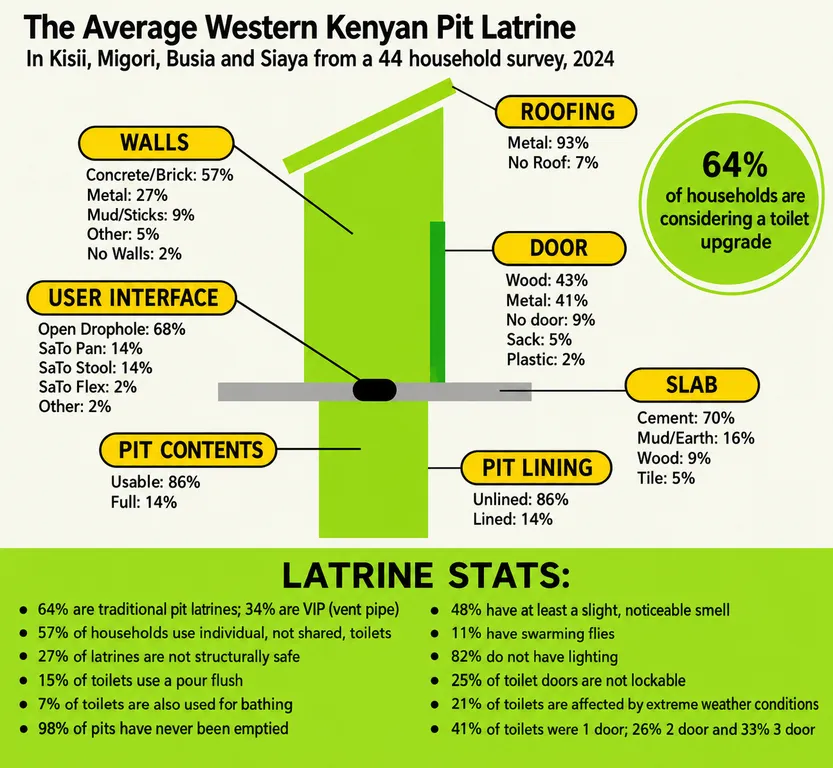
The brief draws together insights from work Opero has carried out over several years rather than from new research. Household preference data comes from the customer discovery study conducted in 2024 under the USAID Western Kenya Sanitation Project, co-implemented by Opero Services and Triangle Environmental. The market context draws on Opero Services’ 2025 assessment of decentralised sanitation services, prepared for the World Bank Group’s 2030 Water Resources Group, as well as published sources cited throughout the brief.
The findings presented here are drawn from households across four counties in western Kenya and should be understood as indicative insights rather than the results of a representative survey. This brief is not a publication of USAID, of the World Bank Group, or of their implementing partners Their work is referenced as secondary source material, while the interpretations and conclusions presented are those of Opero Services alone.
Open the PDF and read the full insight.